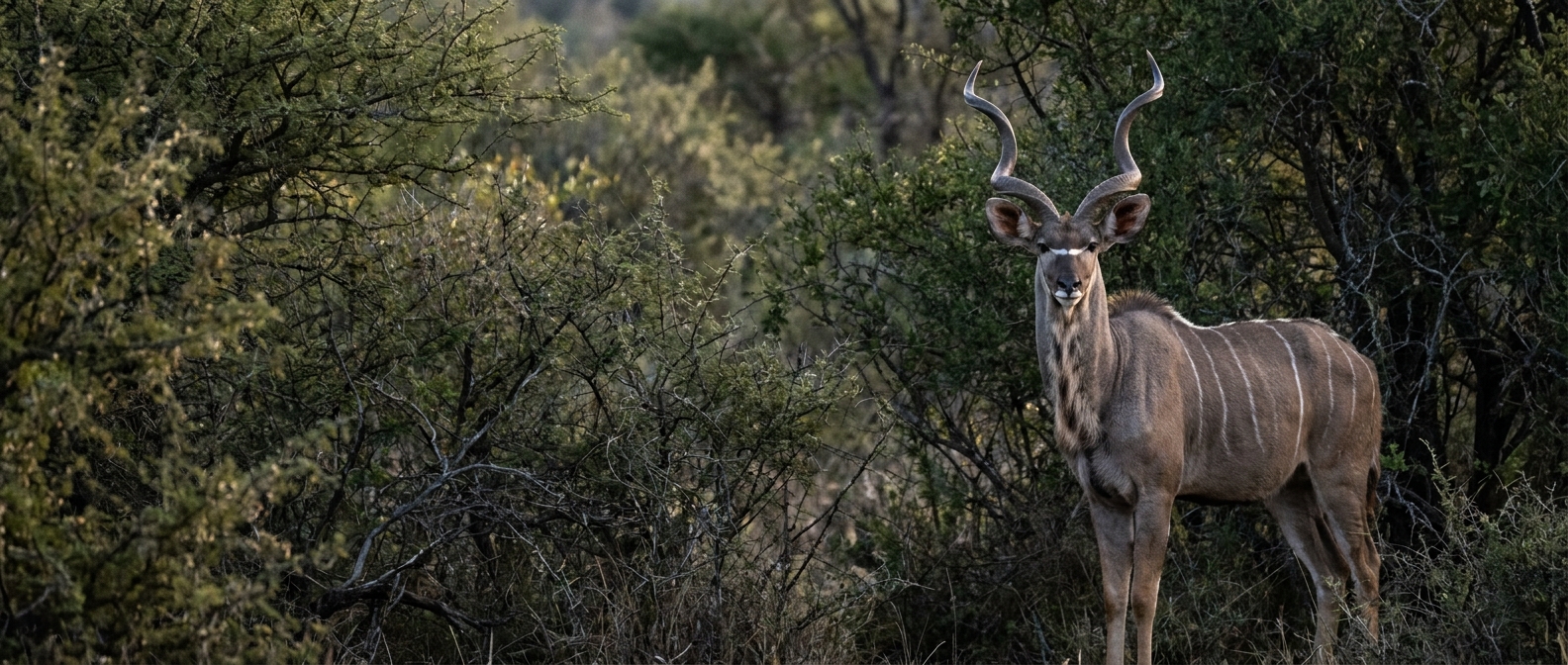
The Grey Ghost of the thickets
Greater Kudu · Tragelaphus strepsiceros
Few African animals earn the quiet reverence of a mature kudu bull. Spiral horns, disruptive stripes, and a freeze that breaks your nerve: this is the graduate course in bush stillness.
In the lexicon of African wildlife, the Greater Kudu sits near the top for hunters, managers, and ecologists alike. For us on the Iron Mountain it is a signal of habitat health: where thick cover, browse quality, and water line up, kudu density tells the truth.
This page is built for people who want more than a trophy photo. We walk through taxonomy, morphology, diet tricks (including how kudu beat tannin warfare), social structure, fieldcraft, rifles, shot placement, meat, and the folklore that still travels around the fire.
Taxonomy and names
Kudu belong to the spiral-horned tribe Tragelaphini alongside nyala, bushbuck, sitatunga, bongo, and eland. The name Tragelaphus strepsiceros is poetry in Greek: goat-like tenacity, deer-like grace, and horns that twist like rope under tension.
Southern greater kudu
T. s. strepsiceros
The form you meet in South Africa, Namibia, Botswana, Zimbabwe, and into southern Kenya. Heavy bodies, classic grey bulls, the backbone of our industry.
East African greater kudu
T. s. bea / chora
Lighter, often less striping, tuned to acacia scrub and more arid country toward the Horn of Africa.
Western greater kudu
T. s. cottoni
Isolated pockets in Chad and western Sudan. Rare air for most hunters, but part of the full map.
Size, coat, and the spiral
The bull
Mature bulls are enormous: roughly 140 to 160 cm at the shoulder and commonly 190 to 270 kg, with exceptional South African animals past 300 kg. Full body size may take until six years. The neck thickens to carry horn weight and to power horn wrestling, not head smashing like sheep.
- Horn length along the spiral often lands near 120 cm. Fifty-four inches is widely discussed as a trophy benchmark; sixty is lifetime-grade; seventy-two-inch records are lightning strikes.
- Bulls tilt the chin up and lay horns back to slip through thorn. The spiral sheds branches instead of hooking every twig.
The cow
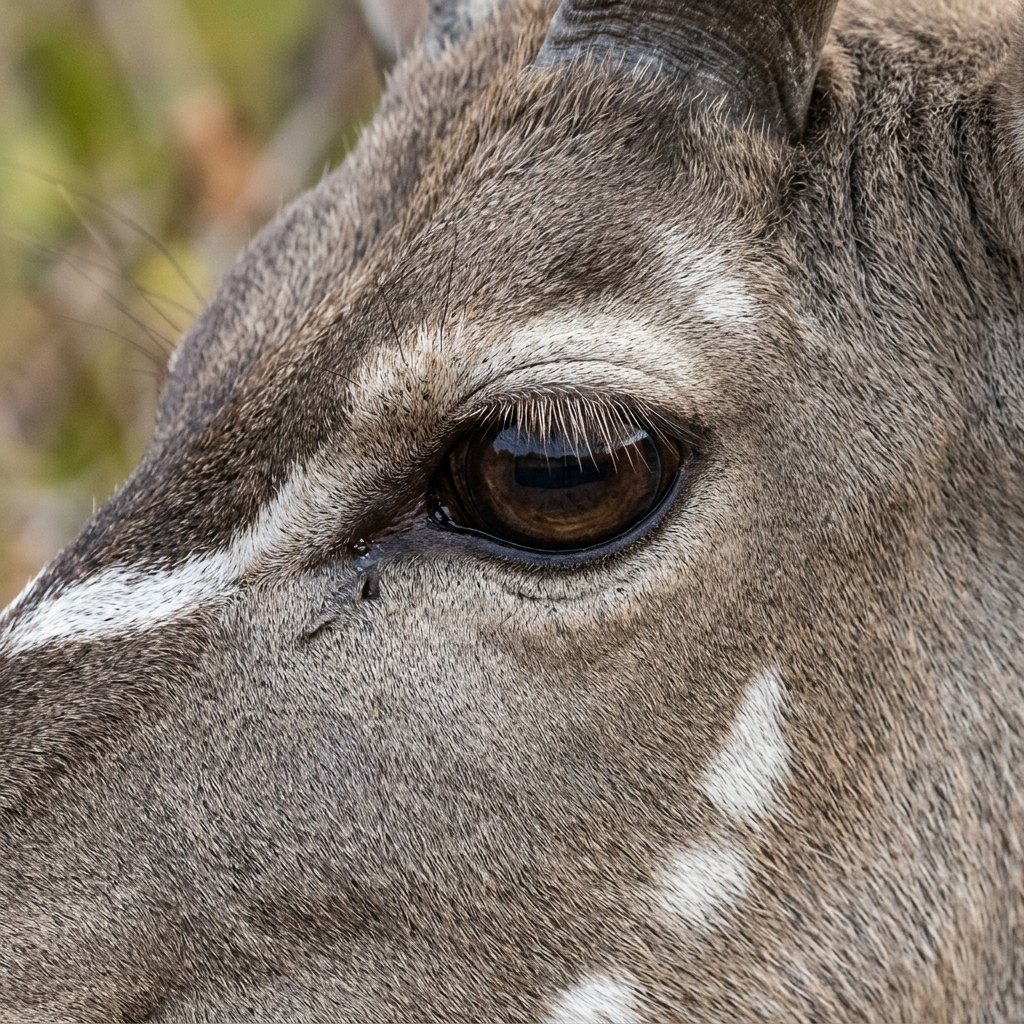
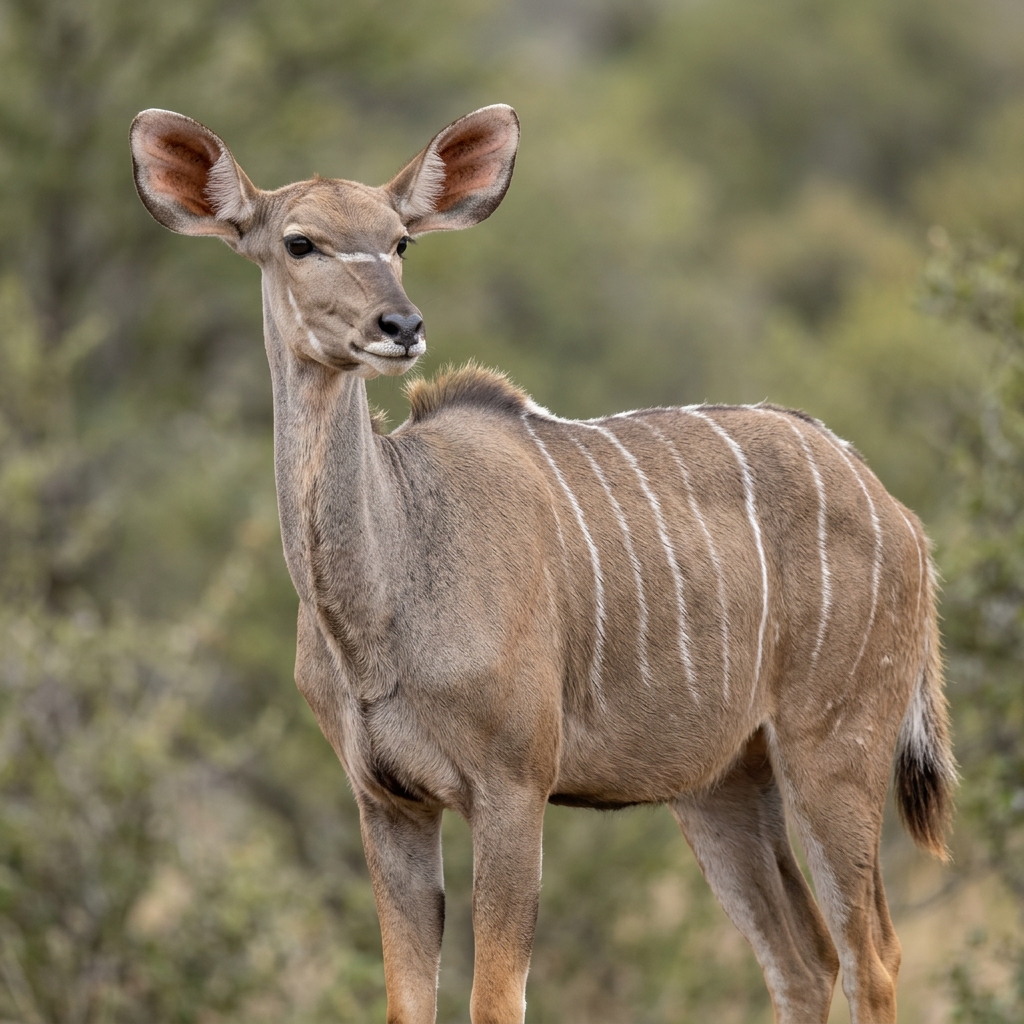
Cows run about 100 to 125 cm at the shoulder and 120 to 210 kg. No horns, less beard, often a softer face. Those ears are not cosmetic: they track the snap that gives a leopard away. Maternal herds share babysitting while calves learn which thicket pockets swallow outline and which fence corners panic when wind fails; misread sex or age in that string and the follow-up is legal, ethical, and veterinary at once.
- Calves lie tight to the screen; glass for a second line before you trust a single gap in the brush.
- Cows read tension faster than lone bulls; spacing and wind matter before another step earns sound.
Stripes and shadow
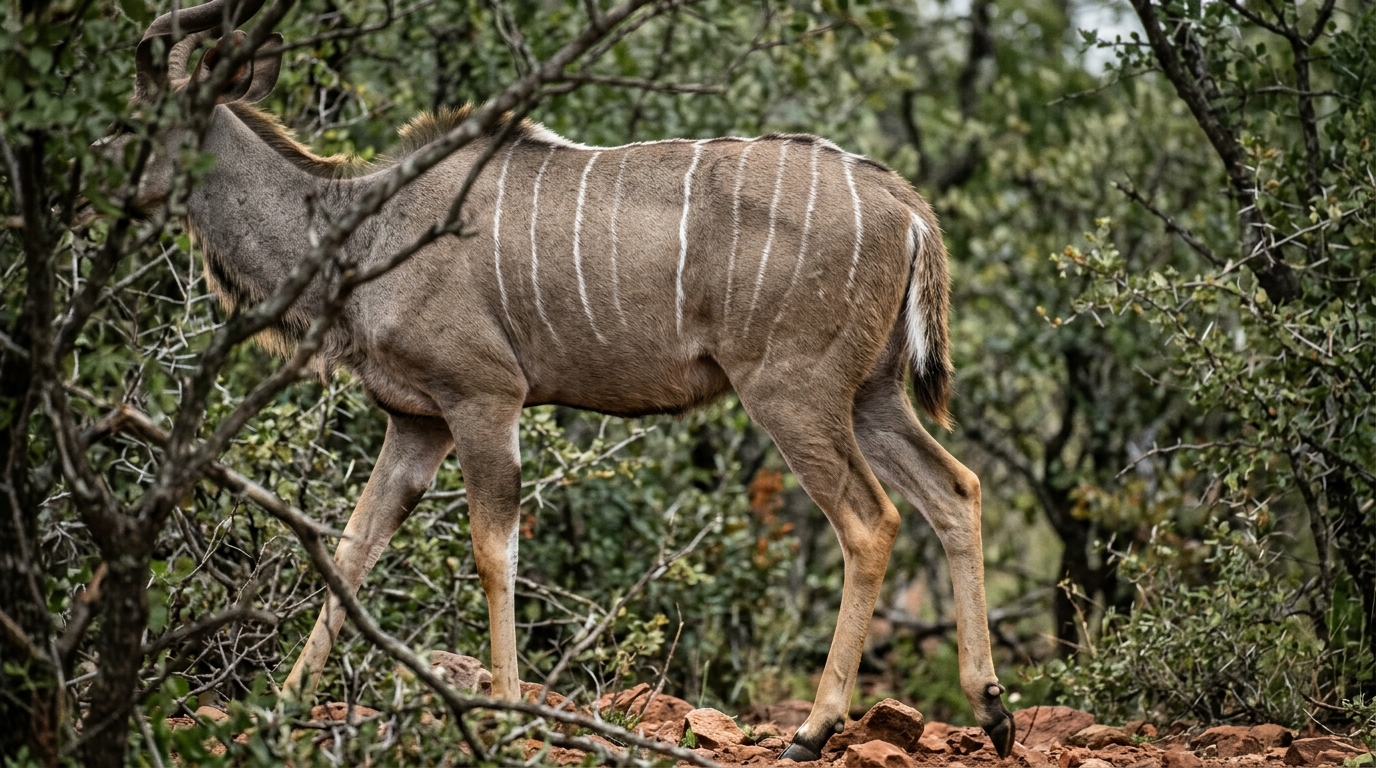
Six to ten vertical white lines break the outline in dappled thicket. In open sun the pattern looks loud. In broken shade it erases mass. Add cheek spots, a chevron, and an erectile dorsal mane for threat display, and you understand why animals “appear” after minutes of staring. Trophy plans usually target mature bulls, yet the same stripe language that flatters a photograph still punishes rushed silhouette calls when heat shimmer stacks on thorn.
“Hunters learn quickly: the first defense is not running. It is standing still until you doubt your own eyes.
Range, heat, and water
Kudu are edge animals: savanna woodland, acacia thickets, riverine strips, koppies with concentrated feed. They are not bulk grassland specialists like wildebeest, and not closed forest hermits like bushbuck. Cover density is the main dial on population.
Big ears dump heat. Thin fat makes cold snaps dangerous. That is why activity skews crepuscular, with midday spent as a grey statue in the deepest shade. Under pressure they may go almost nocturnal, which is when the game gets harder and more technical for the hunter.
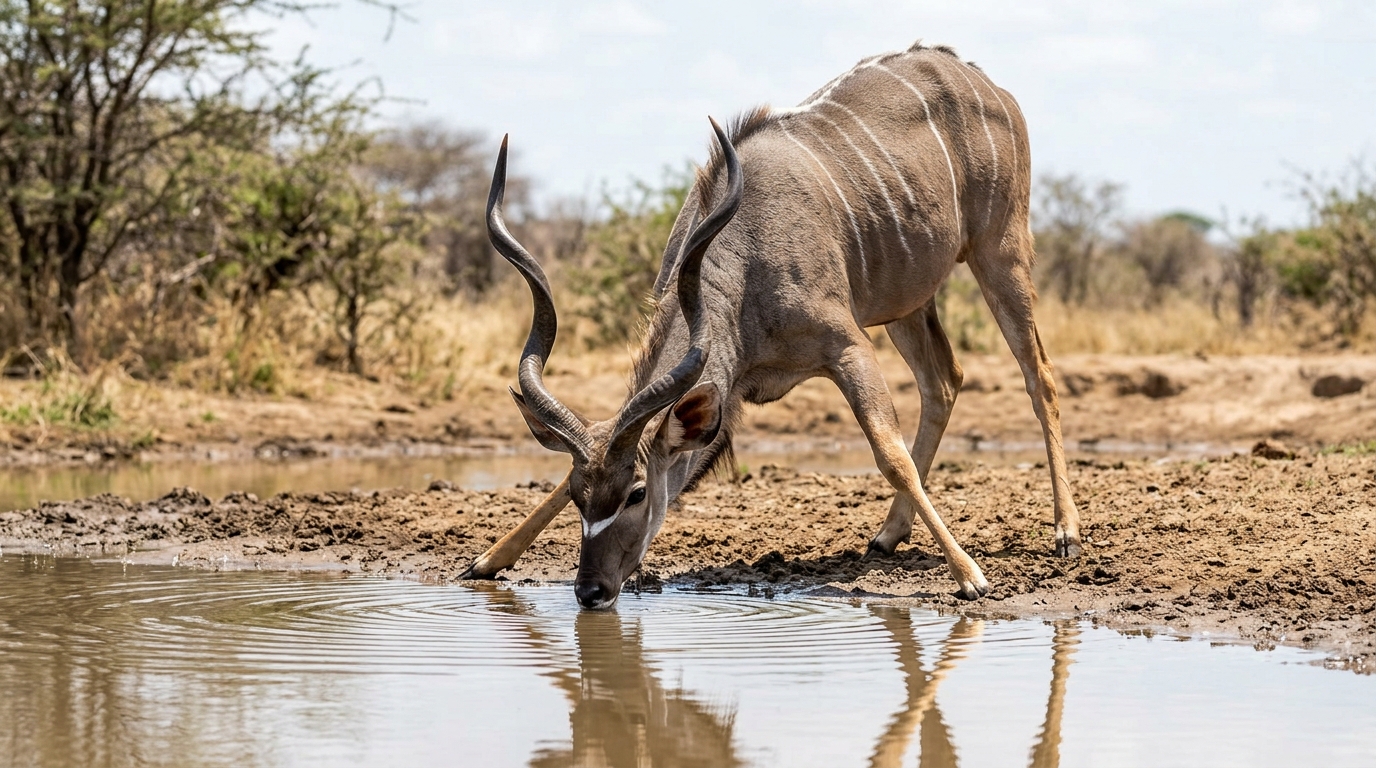
Plan on roughly nine liters of drinking water per day for an adult, usually one or two visits. In dry months they rarely drift more than a few kilometers from reliable water, which concentrates movement and shapes how we hunt ethically in summer.
Browsing and tannin chess
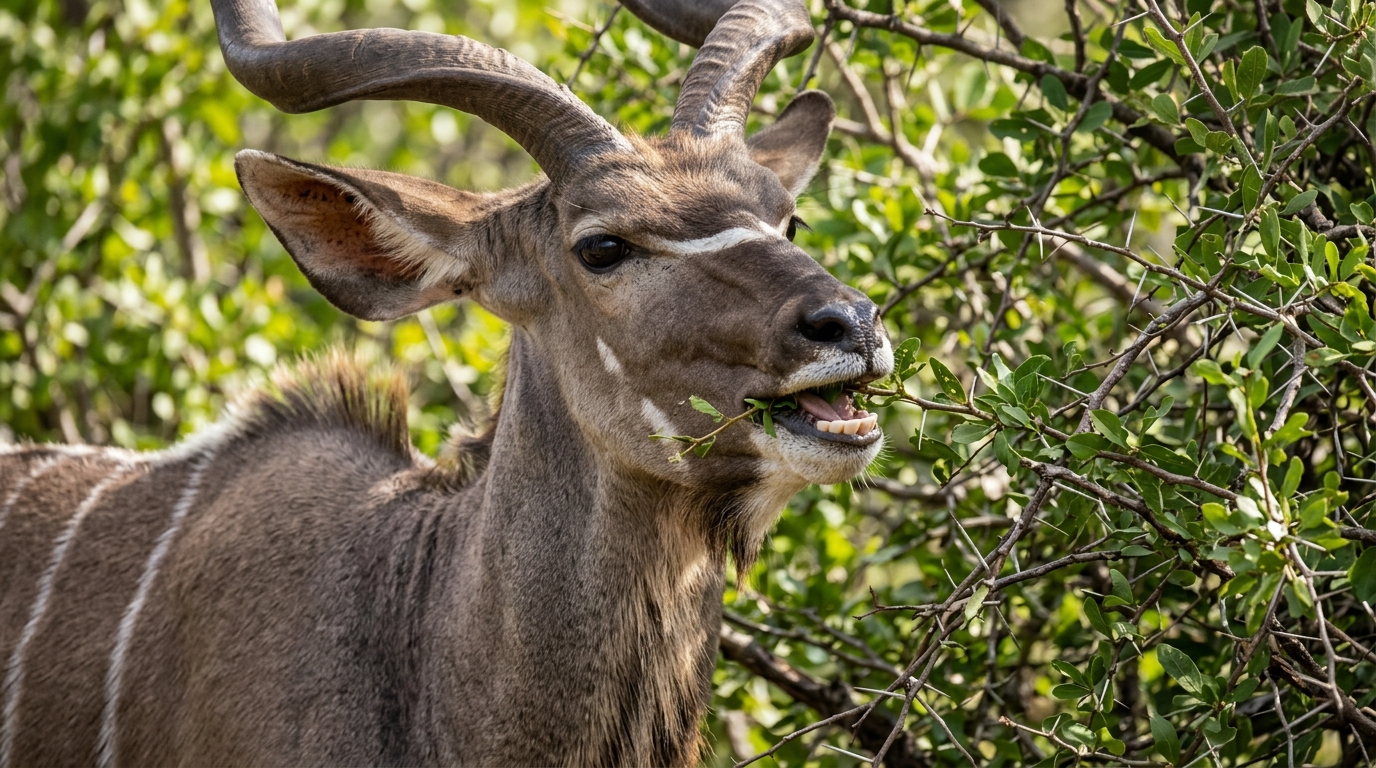
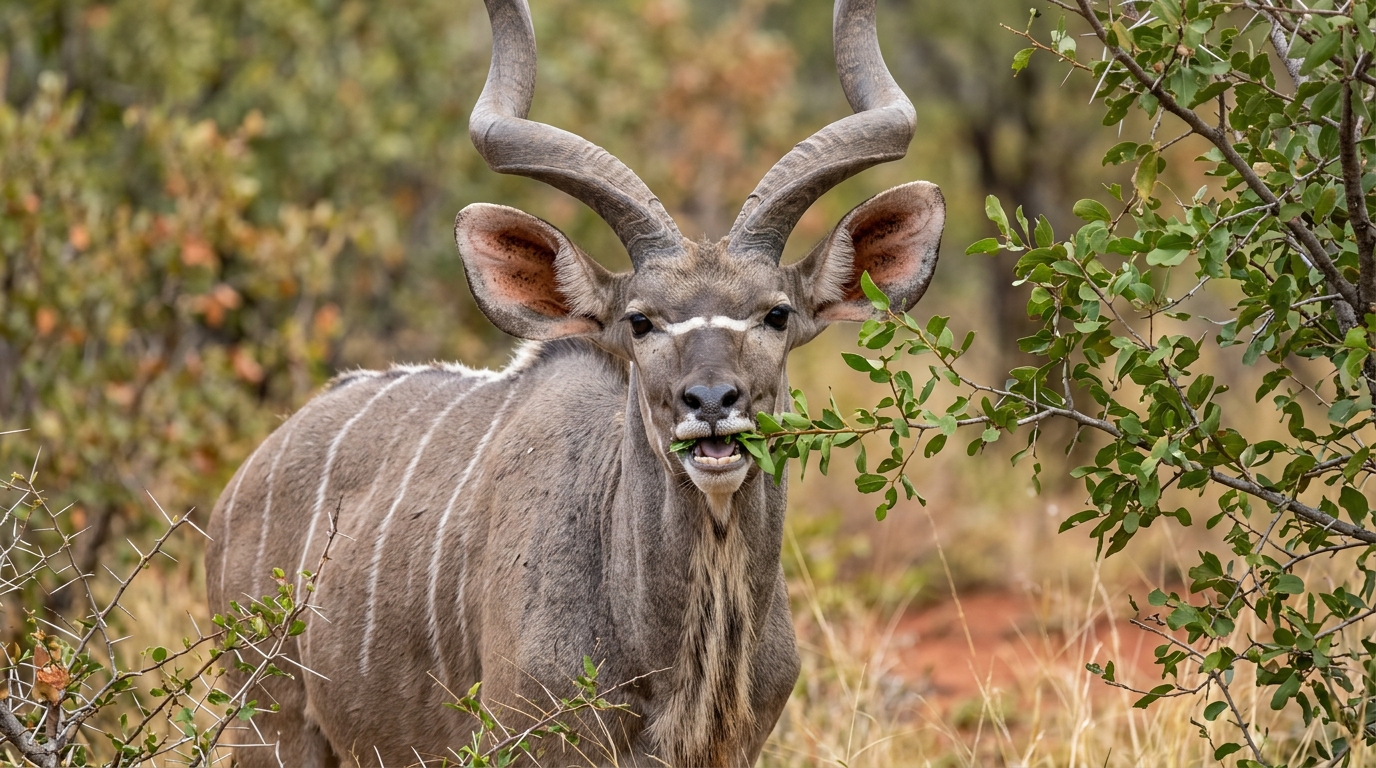
Kudu are pure browsers. Grass is a footnote unless it is young and explosive. They strip acacia and combretum, hit sickle bush that farmers curse, and raid seasonal fruits. The twist: damaged acacias spike tannins fast and warn neighbors with ethylene. Kudu respond by browsing briefly, then moving upwind to fresh leaves. That is why a feeding bull covers ground even when he looks calm.
Field note
If you watch a bull “nibble and walk,” you are seeing chemistry, not boredom. Respect that rhythm on approach: cutting him off from the next tree is often worse than a noisy boot.
Society, rut, and the death lock
Maternal herds
Cows and young run in stable groups, sharing grooming and watch duty across overlapping home ranges.
Bachelor herds
Young bulls peel off around two years, spar in low gear, and sort a pecking order before solitude later in life.
Solitary patriarchs
Old bulls vanish into the worst country. They meet cows on their terms, on a short rut clock.
Rut peaks late summer into early winter in southern Africa. Necks swell. Bulls flehmen on estrus signals. Fights are horn wrestling: lock, twist, leverage. Rarely, spirals bind in a death lock. African camp stories still carry paired skeletons as a warning about pride without exit.
Hunting the ghost
Most serious kudu work is glass, wind, and feet. You are not beating them in a sprint. You are trying to be boring enough to close the meters.
Spot and stalk
Koppie at first light. Scan for horn glint, ear flick, horizontal back line in vertical timber. Plan a stalk on wind, not on hope.
Ambush
Blinds on water or minerals in dry months. Lets you judge age and mass with less movement. Bowhunters live here.
Tracking
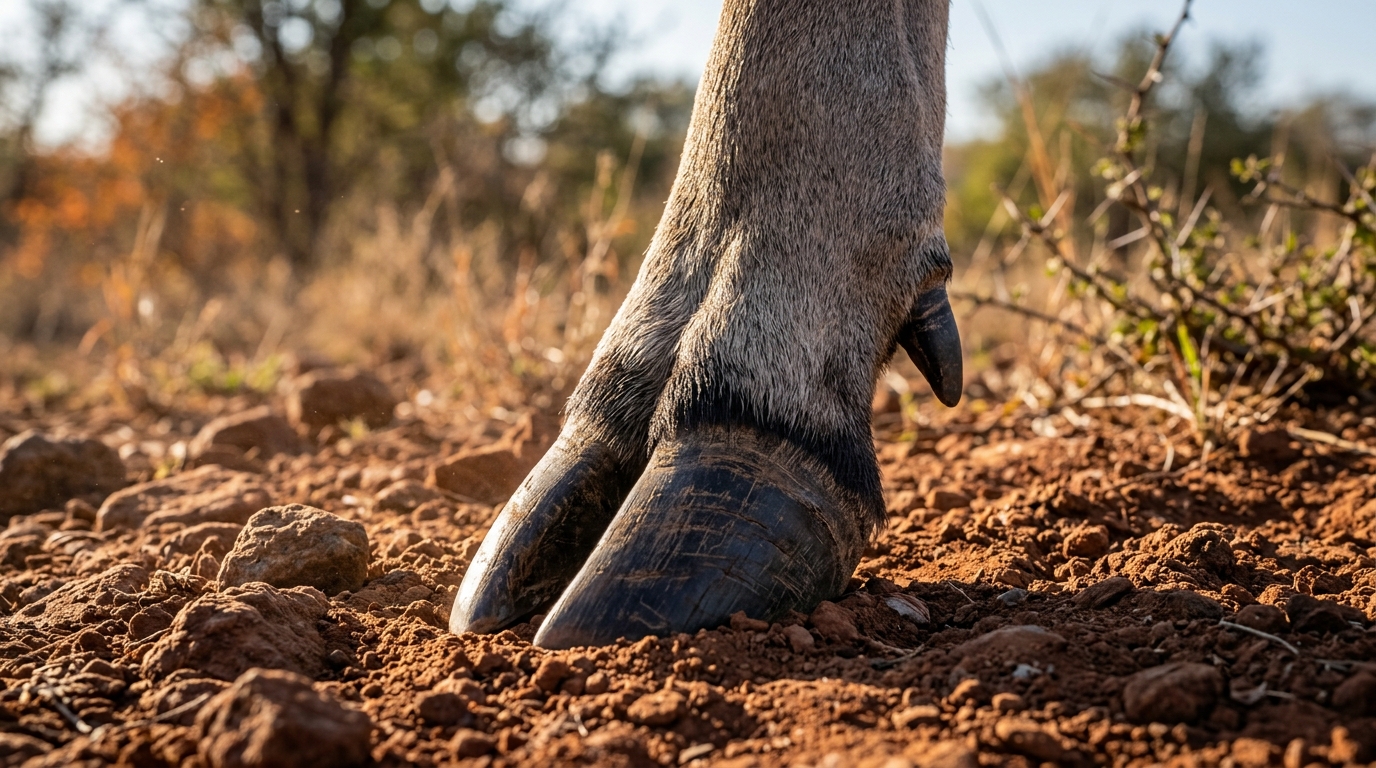
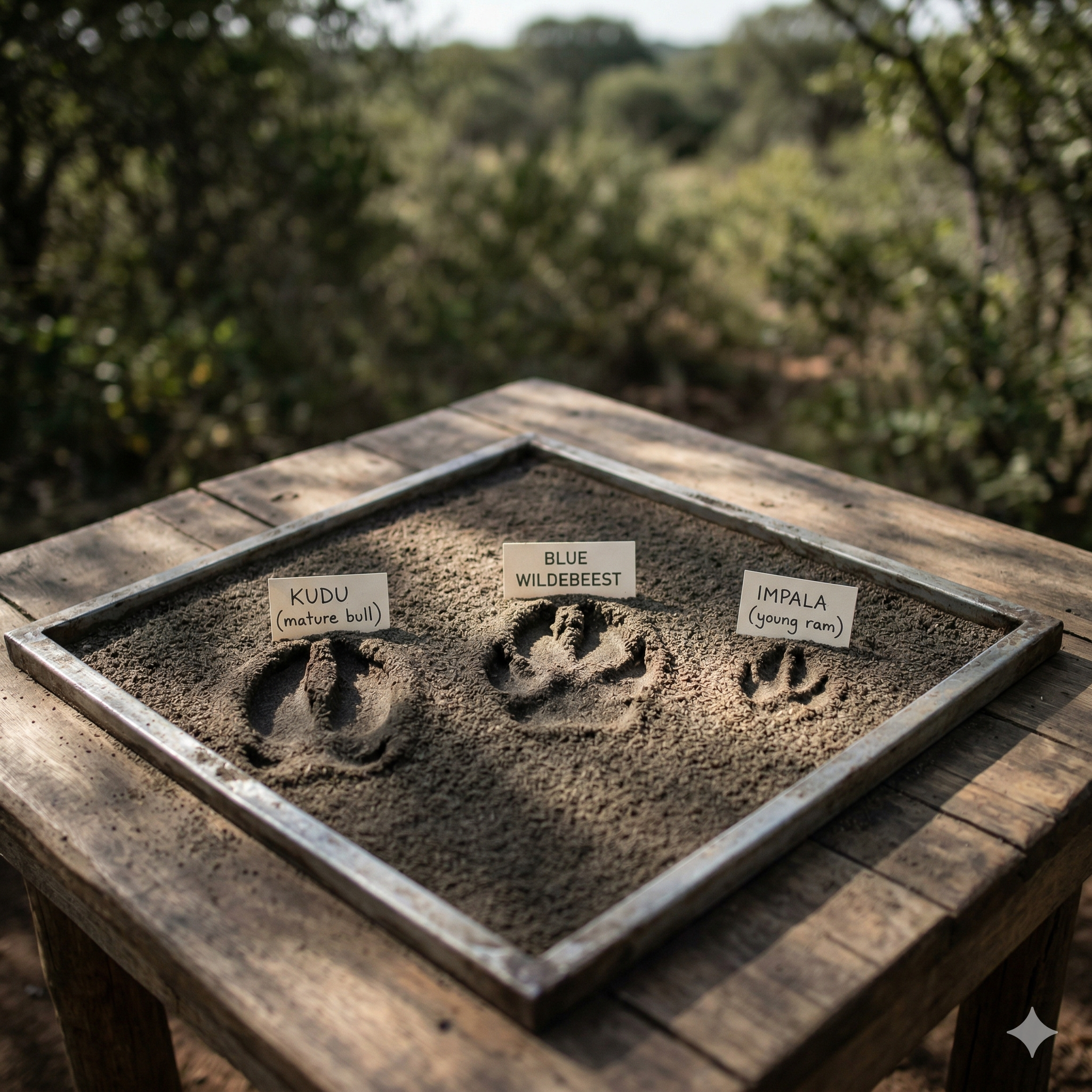
Long kudu tracks: narrow and elongated versus wildebeest hearts. Heavy bulls blunt toes and sink heels. Read gait for panic vs feed.
Trophy sense on the hoof
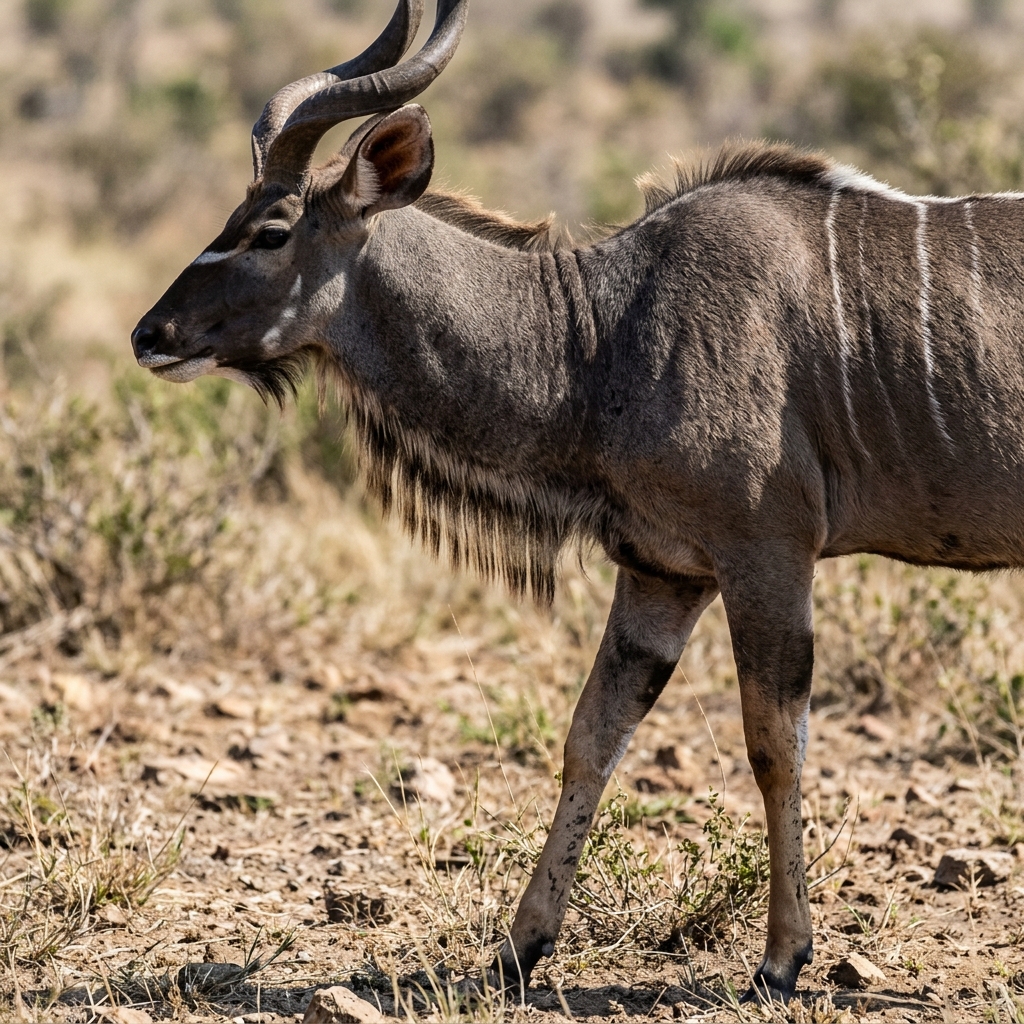
Spirals lie. Deep curls eat length that tight curls hide. Tips out and back usually mean a finished rotation; tips in or up can mean immaturity. Ivory tips from decades of rubbing read as character even when tape loses a fraction. The ear is roughly eight inches: horn past the ear before the first turn is a practical field clue.
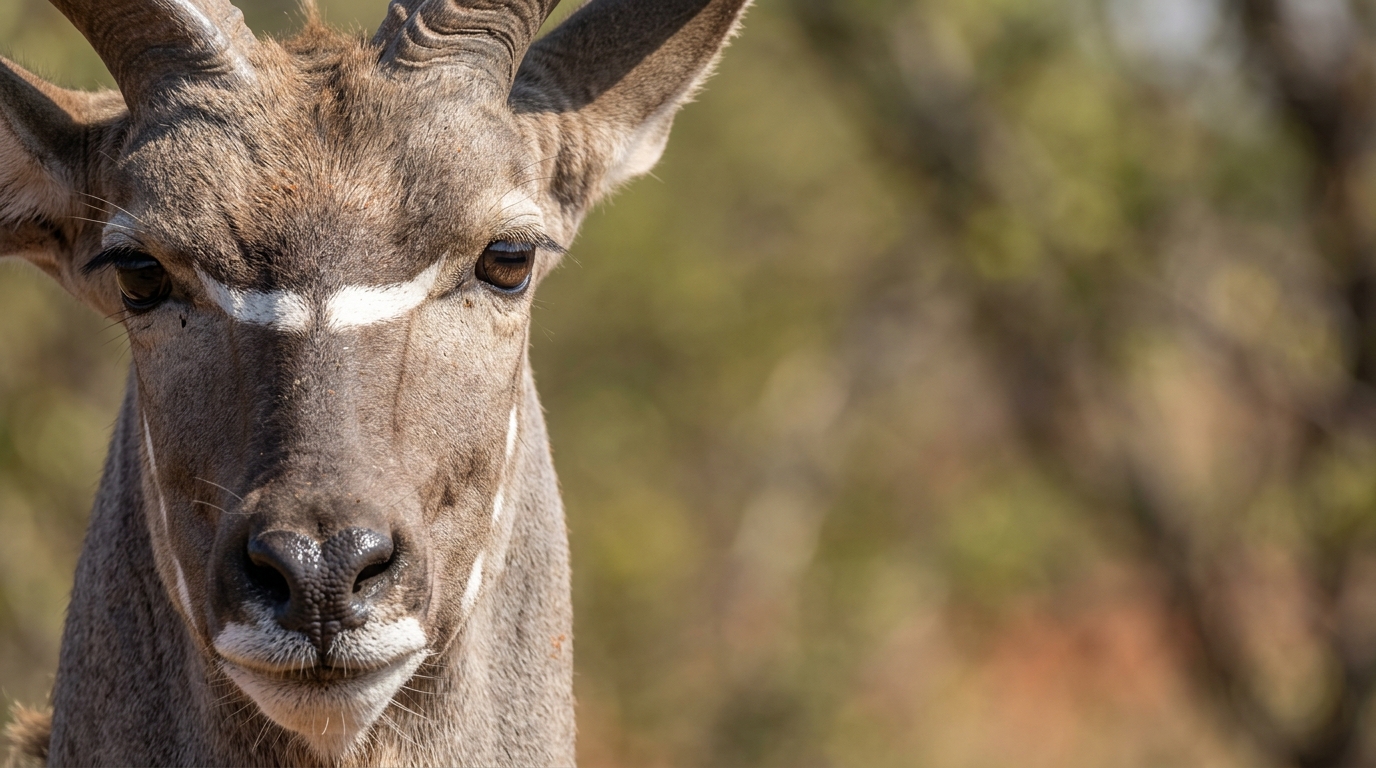
Ethical hunting here is age and condition, not panic over inches. Old bulls show dark facial masks, heavy dewlaps, sway in the topline, and hips that tell stories. Young bulls look clean and athletic. Your PH carries the final say against the quota and the condition of the habitat.
Rifles, bullets, optics, placement
Kudu are big but not buffalo-thick. What you need is controlled expansion and enough shank to punch a shoulder if a twig lies. Premium bonded or partition types have paid for a lot of thicket-country reliability. Monolithics work if you keep speed honest.
| Class | Examples | Notes |
|---|---|---|
| Minimum | .270 Win, 7mm-08 | Open ground, perfect placement, premium bullets. |
| Standard | .308 Win, .30-06 | 180 gr class is a proven all-rounder in thick bush. |
| Magnum | .300 Win Mag, 7mm Rem Mag | Cross-valley confidence and flatter arcs. |
| Thicket | 9.3x62, .375 H&H | Heavy slow bullets forgive light brush. |
- Glass: 10x42 is the African default. Buy transmission you trust in shadow, not just magnification on the box.
- Scope: Low end for close thicket encounters, top end for judging curl across a valley.
- Broadside: Up the back leg, about a third up the body, through heart and lungs. “Behind the shoulder” deer habits can slide you into liver if the angle lies.
- Quartering away: Drive through on the near side, exit opposite shoulder if you can picture the line.
- Follow-up: Mark exit, expect short blood then dense browse — kudu fold fast if the line held. Radios and a calm grid search beat hero sprints.
- Wind: Thicket eddies lie. Reset when the string goes still before you take another step; bulls often vote on wind before you finish dialling magnification.
Quick reference
| Scientific name | Tragelaphus strepsiceros |
|---|---|
| Trophy talk | 54 inches discussed as strong; 60 is legend-grade |
| Bull mass | 190 to 270 kg typical; exceptional animals heavier |
| Cow mass | 120 to 210 kg; hornless |
| Water | ~9 L / day; dry-season concentration near perennial sources |
| Browse staples | Acacia, combretum, sickle bush, seasonal fruit, spekboom |
| On Iron Mountain | Mountain Thickets · .300 Win Mag / .30-06 per estate brief |
Ready to hunt the spiral?
Bring patience, good glass, and a rifle you can shoot cold. We will match you to the bush as it is this season, not as a brochure promised last year.